
The blower is running, air is moving through the registers, and it is cool. That rules out a few things straight away: the furnace has power, the thermostat is calling, the blower works. What is missing is heat, which means the burner either did not light, or lit and was shut down by a safety control while the blower kept going to cool the exchanger. Here are the causes, in the order we find them in Ottawa basements.
First, is it actually a fault?
- The fan is set to On. On the thermostat, Auto runs the blower only when there is heat to move; On runs it all the time. Between heating cycles, On pushes room-temperature air through ducts that pass through a cold basement, and it arrives at the register feeling cold. Set it to Auto. This is the most common cause on this list, and it costs nothing.
- The furnace is warming up. The burner lights first, the heat exchanger warms for a minute or so, then the blower starts. The first thirty seconds of air can be cool. If it is warm within two minutes, nothing is wrong.
- You have a heat pump. A hybrid system running on the heat pump delivers air at perhaps 30 to 38 degrees, warm rather than hot. That is normal, and the furnace takes over below the changeover temperature. If the air stays lukewarm at minus 20, the changeover setting needs looking at, which is a quick service call.
The furnace overheated and protected itself
A loaded filter, a blocked return, too many closed registers or a weak blower all starve the heat exchanger of airflow. The exchanger climbs past its limit, the high-limit switch cuts the burner, and the blower keeps running to bring the temperature down: cold air at the registers. After a few minutes the furnace tries again, heats, trips, and repeats.
Pull the filter and replace it if it is grey. Open every register and make sure the return grilles are not covered by furniture or a rug. Give it ten minutes. If the air is still cold, the limit switch may have locked out, the blower may be weak, or the exchanger may be restricted, and that is a repair call. A furnace that has been tripping on limit for weeks is also a furnace whose heat exchanger has been stressed for weeks, which matters below.
The burner lit and gave up
Stand at the furnace and watch a start. If the burners light and go out two to five seconds later, and the furnace does that three or four times before locking out, the flame sensor is the cause nine times in ten. It is a thin rod in the flame that proves to the control board the gas has lit. Over a season it picks up a coating that insulates it from the flame; the board reads no flame, closes the gas valve, and tries again. Cleaning the rod is a ten-minute job and part of every annual tune-up. If the rod is pitted it is replaced, $160 to $270 in the Ottawa area.
The burner never lit
If the inducer fan starts and nothing follows, or the igniter glows and no flame appears, the cause is upstream of the flame sensor.
- The pressure switch has not closed. The inducer is proving the vent, and the switch does not see the pressure it needs. In Ottawa this is usually weather: snow drifted over the intake or exhaust on the outside wall, an ice cap on the exhaust, or a condensate line frozen on a minus 25 night. Clear the pipes, thaw the line, and the furnace restarts. If it keeps happening, the terminations need extending above the drift line or the drain needs rerouting.
- The igniter has cracked. A hot-surface igniter is ceramic and brittle; it fails after a few years of heating and cooling. You will hear the inducer, then a pause where the glow should be, then lockout. A stocked part, $220 to $380 fitted.
- The gas valve or the supply. A closed shut-off on the furnace line, an empty propane tank in Manotick, or a failed valve.
- A failed control board, which can look like any of the above.
The full start-up checklist, with the board flash codes, is in furnace will not start?.
Cold air that is not the furnace's fault
Sometimes the furnace is heating perfectly and the air is cold by the time it arrives. Ducts that run through an unheated crawlspace, a garage ceiling or an uninsulated attic, common in Ottawa's 1960s bungalows and in subdivision homes with a bonus room over the garage, lose heat and pull in cold air through every open joint. The bedroom at the end of the run gets air that left the furnace at 50 degrees and arrives at 25. That is a duct sealing and insulation job, and no furnace repair fixes it.
The one cause to take seriously
A cracked heat exchanger can make a furnace trip on its safety controls repeatedly, which shows up as cold air, and it can let combustion gases, including carbon monoxide, into the air the blower sends through the house. A technician who finds a crack will shut the furnace down and will not restart it. Make sure the carbon monoxide alarm in the house works, and if it sounds, get everyone outside before doing anything else.
What to tell us when you call
Set the fan to Auto, change the filter, check the pipes outside, wait ten minutes. If the air is still cold, watch one start and note three things: whether the inducer runs, whether the burners light, and how long they stay lit. That observation turns most visits into a single-part repair, done on the first trip from the parts on the truck. The diagnostic in the Ottawa area is typically $109 to $159, credited against the repair, and the phone is answered every day of the year.
Prepared by the 343 HVAC technical team as general guidance for homeowners. It is not a diagnosis of the equipment in your house. Call to talk through your own heating system.
Services this guide relates to
Repair
Furnace Repair
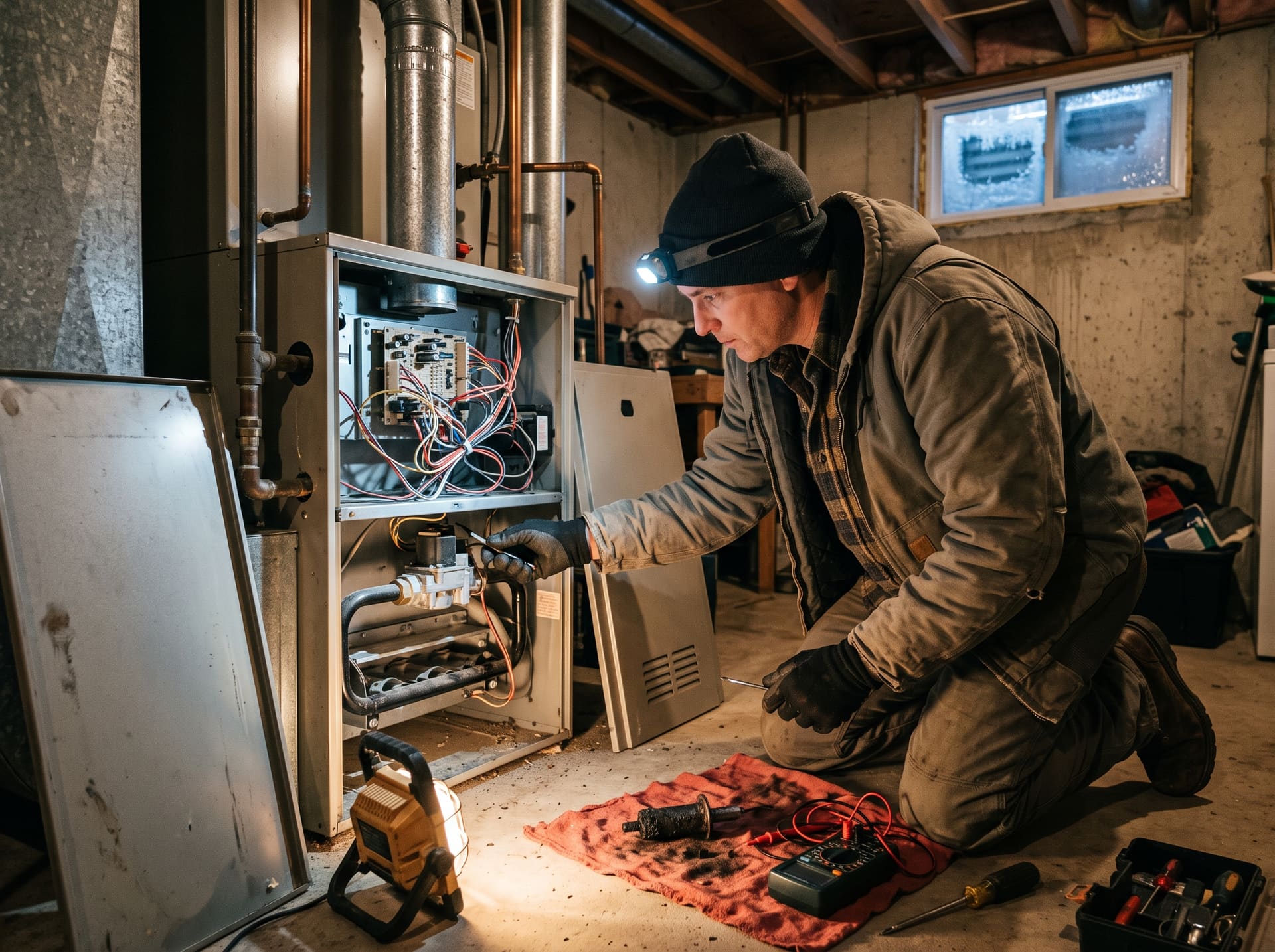
A furnace that quits in an Ottawa cold snap needs a technician who finds the real fault the first time. We repair every make of gas and propane furnace, explain what failed and why, and put the price in writing before the part goes in. Same-day calls across Ottawa, Nepean, Stittsville and the surrounding communities.
Learn more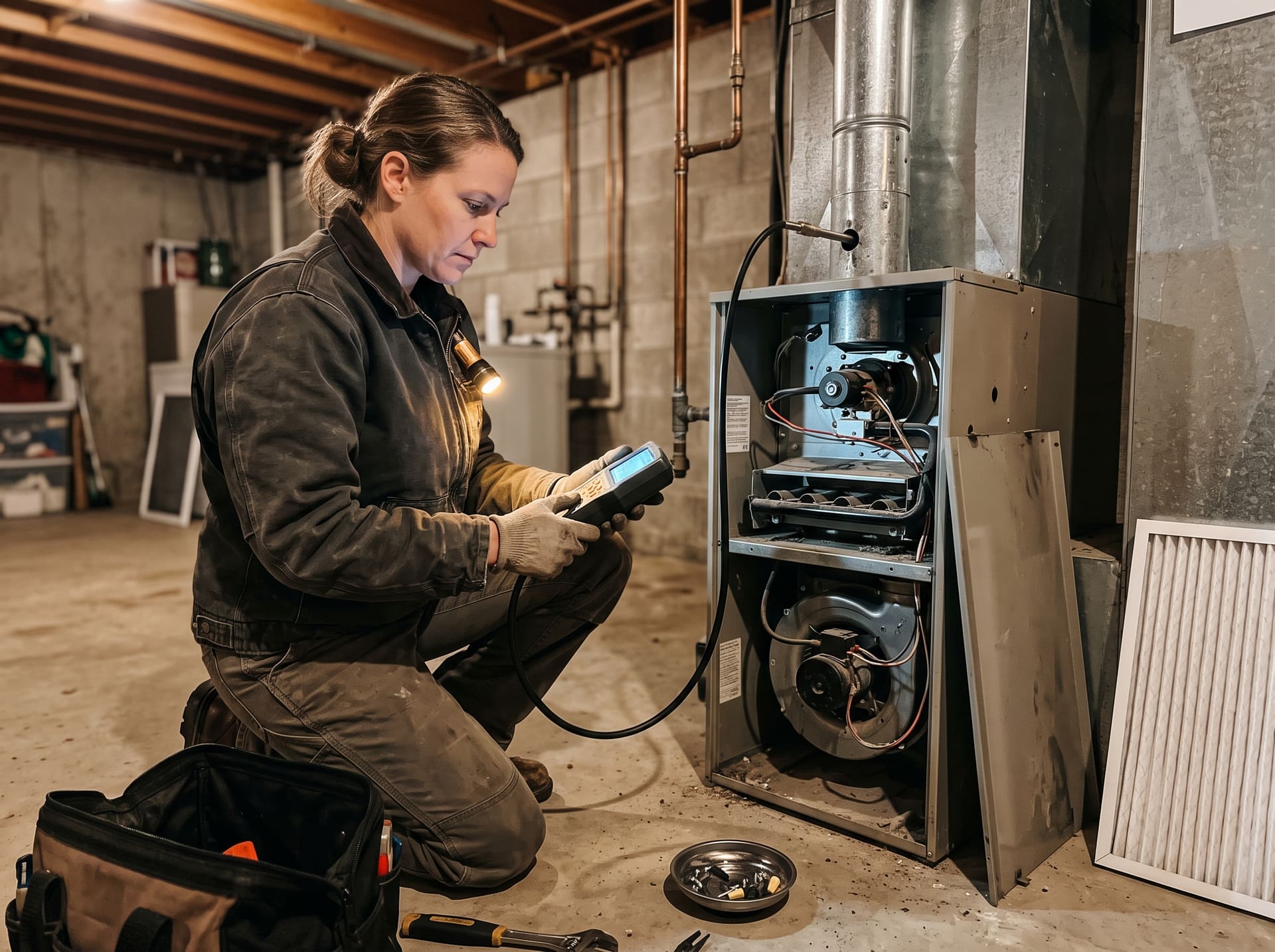
Maintenance
Furnace Maintenance & Tune-Ups
The first -20 night of the year is when Ottawa furnaces give up, because it is the first time all season they run flat out for hours. A proper service in the fall finds the weak igniter and the fouled flame sensor while the weather is still forgiving. We service furnaces in Ottawa, Barrhaven, Gloucester and the surrounding communities.
Learn more


